
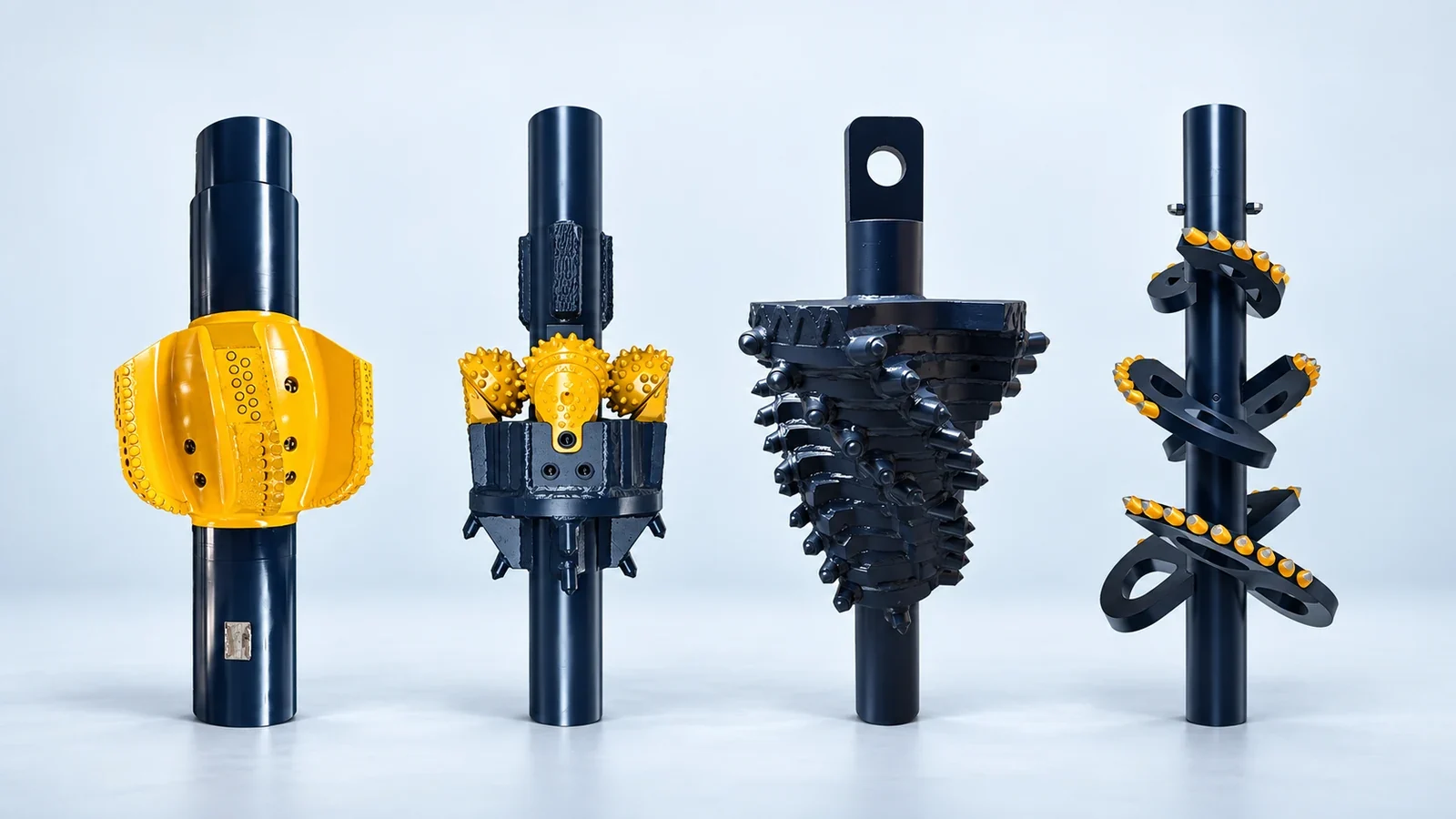
Choosing an HDD rock drill bit or reamer starts with the formation—not the tool name. Confirm the ground profile, strength and abrasiveness; note whether the bore crosses changing layers; then match the cutting structure, bore stage, diameter, connection and fluid plan to those conditions. A tool that is productive in consistent sandstone may be a poor choice in abrasive granite or unstable mixed ground.
This guide explains how PDC drill bits, tricone drill bits, PDC reamers and roller-cone hole openers fit into a horizontal directional drilling program. Final selection should always be reviewed against the geotechnical information, bore plan and drill-rig requirements for the specific project.
Quick HDD tooling selection table
| Ground or job condition | Starting point for tool review | Why it enters the shortlist |
|---|---|---|
| Clay and other soft ground | Soil reamers such as fluted, fly cutter, barrel, multi-stage or paddle designs | These are the soil-tool families available for projects where cutting, mixing, stabilization and spoil movement must be considered together. Select the exact design from the soil behavior and bore plan. |
| Soft to medium consolidated formations | PDC drill bit for the pilot bore; fixed or bolt-on PDC reamer for suitable reaming stages | PDC cutters shear the formation without rotating cone assemblies. Blade count, cutter size and fluid passages must be matched to the application. |
| Shale, limestone and sandstone | PDC or tricone solutions may be considered after reviewing abrasiveness, strength and variability | The correct choice depends on whether the formation favors fixed-cutter shearing or roller-cone action. Mixed layers require particular caution. |
| Medium to hard rock | TCI tricone bit or TCI roller-cone hole opener | Tungsten carbide insert cutting structures are intended for stronger rock than milled-tooth structures. |
| Granite, quartzite, high-silica ironstone or very hard basalt | Roller-cone tooling rather than a PDC bit | DRILLNOVA’s catalog specifically advises against using its PDC pilot bits in these formations and directs the user to roller bits. |
| Changing or uncertain formations | Engineering review before confirming the tool | Formation transitions can change torque, penetration, cuttings size and fluid-return behavior during the same bore. |
The table is a screening guide, not a substitute for project-specific engineering.
1. Begin with the formation profile
The phrase “hard rock” is not enough to select a rock drill bit. The review should identify:
- the soil and rock layers along the complete bore path;
- expected transitions between soft, mixed and competent ground;
- compressive strength information when available;
- abrasiveness, silica content and the presence of cobbles or broken rock;
- groundwater and expected fluid-return conditions; and
- whether the pilot bore and reaming passes will remain in the same formation.
A short interval of highly abrasive rock can influence the tooling decision even when most of the alignment is softer. Where the ground report is incomplete, the safest result is usually a technical review rather than a confident selection based only on a broad formation label.
2. Choose the pilot bit by cutting action
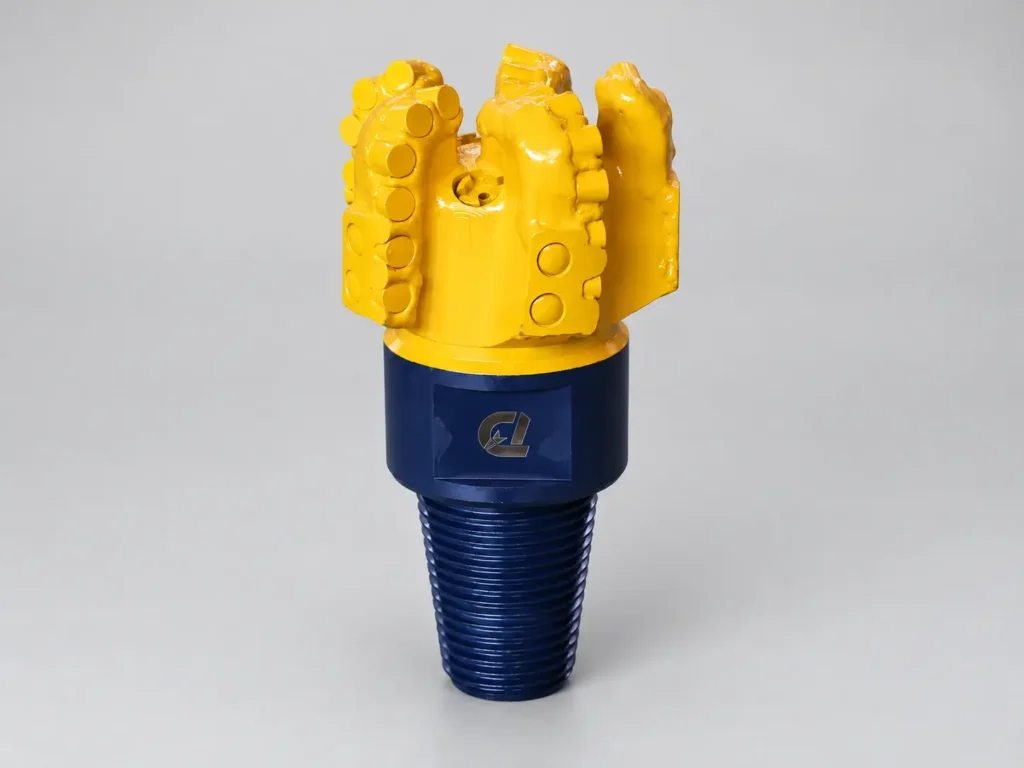
PDC drill bit
A PDC drill bit uses fixed polycrystalline diamond compact cutters to shear the formation. DRILLNOVA’s NovaPilot PDC range is presented for soft to medium formations and is available with three- to six-blade configurations. The catalog lists 13 mm, 16 mm and 19 mm cutter options, while the final blade and cutter arrangement depends on the job.
PDC tooling enters the shortlist when the formation is suitable for a fixed cutting structure and steering response is important. During operation, torque, penetration rate and fluid returns should be considered together. Rising torque with falling penetration is a reason to review the bit condition, cuttings removal and any change in the formation.
Tricone drill bit
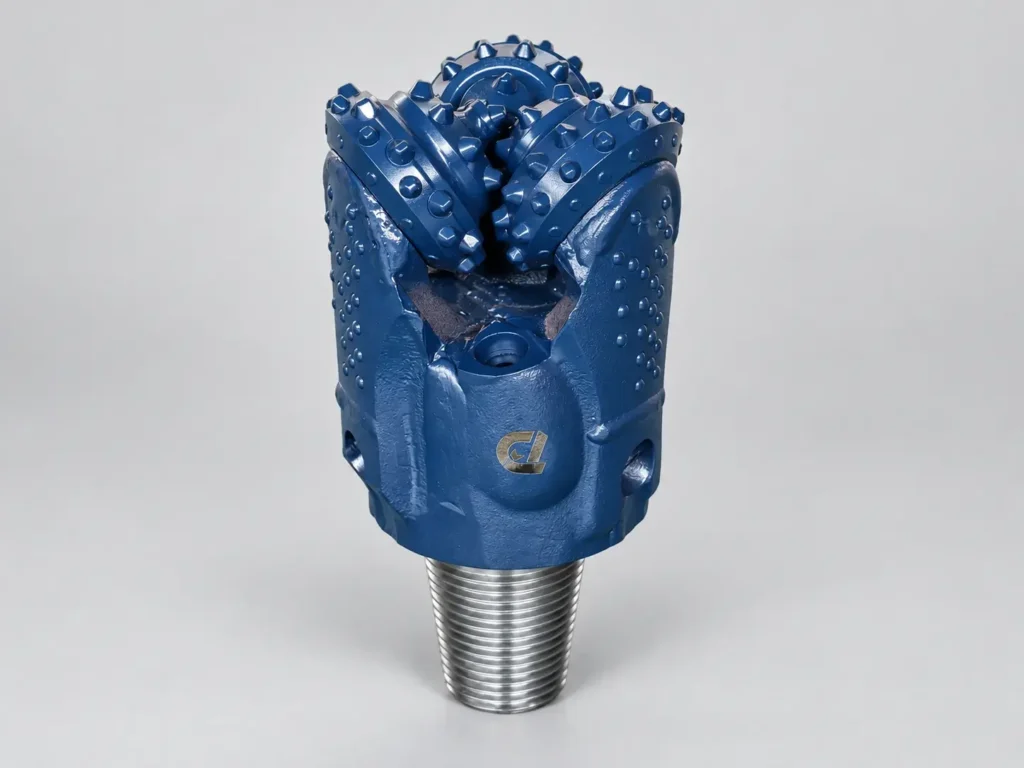
A tricone drill bit uses three rotating cones. DRILLNOVA lists both milled-tooth and TCI cutting structures:
- Milled tooth: a starting point for softer formations such as clay and mudstone, with catalog coverage extending into chalk, shale, limestone and sandstone depending on the selected IADC range.
- TCI: a tungsten carbide insert option for stronger and more abrasive formations, including shale, limestone, sandstone and selected high-strength rock applications.
The IADC code, bearing and seal type, bit diameter, pin connection, weight on bit and RPM must be reviewed as one system. A tricone bit should not be selected from diameter alone.

3. Select the reamer after the pilot-bore strategy is clear
The pilot bit makes the initial bore; the reamer enlarges and conditions it. Reamer selection therefore depends on more than the final diameter. Confirm the pilot-hole condition, number of enlargement stages, expected cuttings, pullback plan, fluid capacity and connection before choosing a drilling reamer.
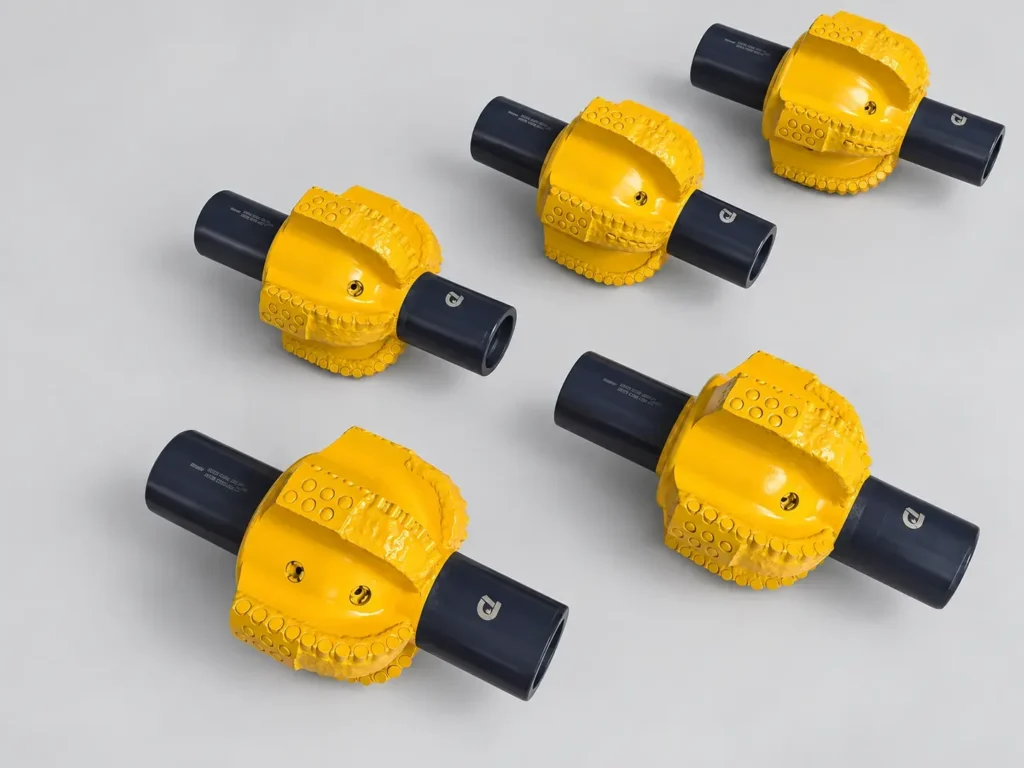
Fixed PDC reamer
The Novacut F is a fixed-blade PDC reamer for suitable consolidated formations. Its cutting structure shears the formation without rotating cone assemblies. DRILLNOVA lists an 8–36 inch size range, three to seven blades, 13/16/19 mm cutter options and customizable API REG, IF or NC connections.
A fixed design offers a simple cutting assembly, but cutter condition, body wear and fluid passages require inspection during service. Jetting ports can be specified where improved cuttings evacuation is needed.
Bolt-on PDC reamer
The Novacut B uses replaceable bolt-on blade assemblies on a reusable body. It is worth considering when on-site blade replacement, reduced spare-body inventory or faster maintenance turnaround matters to the project. The catalog lists the same 8–36 inch size range, three to seven blade positions and 13/16/19 mm cutter options, with single- or double-row blade choices.
The blade set must match the body and target diameter. The bolt-on structure also uses an anti-loosening locking system, which should be checked as part of assembly and service inspection.
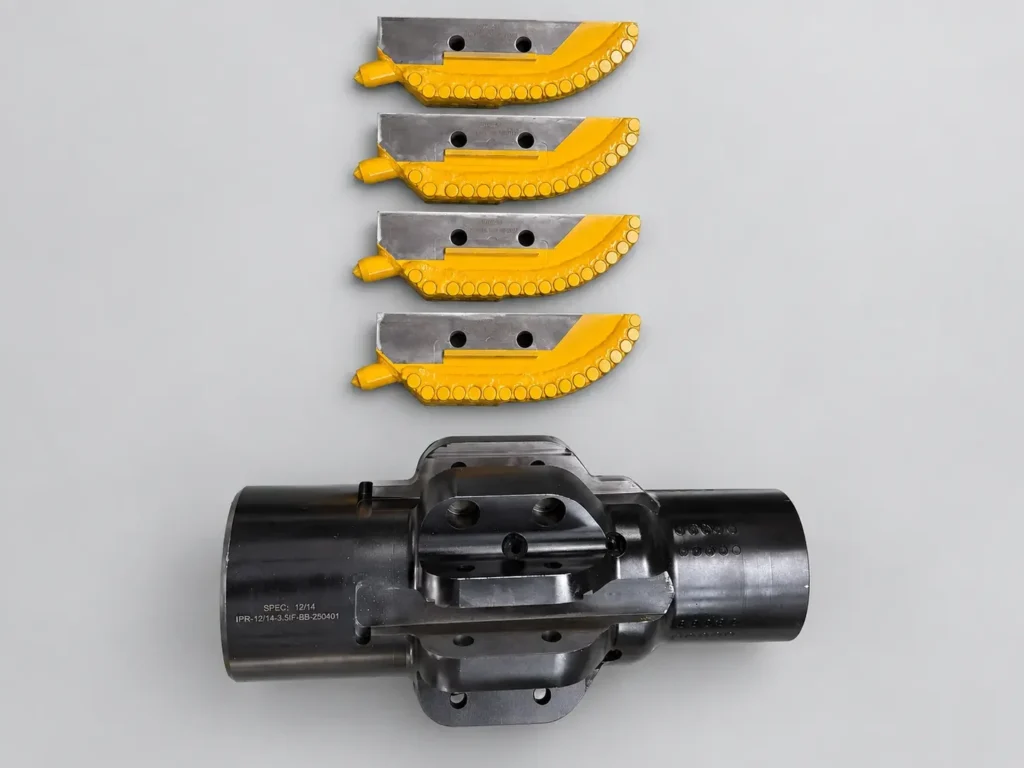
Roller-cone hole opener
For rock reaming, a roller-cone hole opener uses cone cutters arranged around the tool body. A TCI cutting structure is used for stronger rock, while steel-tooth cutters suit softer formations. DRILLNOVA offers both bolt-on replaceable cutter systems and fixed welded assemblies.
The distinction affects service planning:
- bolt-on cutters can be exchanged without welding when the matching cutter and locking components are available;
- welded cutter assemblies require workshop repair and inspection when replacement is needed; and
- cutter type and layout must be matched to the hole diameter and actual ground.
4. Check diameter, connection and rig compatibility
An appropriate cutting structure can still fail the application review if the mechanical interface is wrong. Before ordering, confirm:
- pilot-bit or reamer outside diameter;
- planned enlargement stages rather than only final bore diameter;
- pin and box connection type and size;
- housing and drill-rig compatibility;
- available thrust, torque and rotational speed; and
- required clearance for cuttings and fluid movement.
Do not infer compatibility from a photograph or a familiar-looking thread. Connection dimensions should be confirmed from the rig, housing or existing tooling record.
5. Review hydraulics and cuttings removal
Fluid flow is part of tool selection. The tool must support cooling, cleaning and cuttings transport through the planned bore. Blade count, cutter layout, jetting ports and the open area around the reamer influence how cuttings leave the face.
During drilling, review torque, penetration and returns as related indicators. A change in only one value rarely tells the full story. Reduced penetration together with increasing torque or poor returns may indicate formation change, cutter wear or inadequate removal of cuttings.
HDD tool selection checklist
Send the following information when requesting a technical recommendation:
- bore profile and total length;
- formation log or geotechnical report;
- pilot-hole and final bore diameters;
- planned number of reaming passes;
- drill-rig model and housing details;
- connection type and measured dimensions;
- available torque, thrust, RPM and fluid flow;
- known abrasive or high-silica intervals; and
- photographs and operating records from any previous tool used on the job.
This information is more useful than asking for “a hard-rock bit” without project context.
Frequently asked questions
What is the best rock drill bit for HDD?
There is no universal best rock drill bit. PDC bits suit selected soft-to-medium consolidated formations, while TCI tricone bits are the stronger starting point for hard or highly abrasive rock. Granite, quartzite, high-silica ironstone and very hard basalt should be reviewed for roller-cone tooling rather than the PDC bit described in the DRILLNOVA catalog.
What is the difference between a PDC drill bit and a tricone drill bit?
A PDC bit uses fixed diamond compact cutters that shear the formation. A tricone bit uses three rotating cones fitted with milled teeth or tungsten carbide inserts. The correct choice depends on strength, abrasiveness, variability and the operating window of the HDD rig.
How do I choose an HDD reamer?
Choose an HDD reamer from the ground conditions, pilot-hole condition, enlargement stages, final diameter, fluid and cuttings plan, connection and rig capacity. Then decide whether the project favors a fixed cutting structure, replaceable blades or roller-cone cutters.
Can one reamer handle mixed formations?
Sometimes a selected design can cover a defined range, but “mixed formation” can describe very different transitions. Review the hardest and most abrasive intervals, not only the average ground description, and confirm the cutter layout with the tooling supplier.
Match the tool to the project
Effective HDD tool selection is a controlled matching process: formation first, cutting action second, then diameter, connection, hydraulics and maintenance. Share the bore plan and rig information with DRILLNOVA for a project-specific review of the pilot bit, drilling reamer or rock hole opener.