
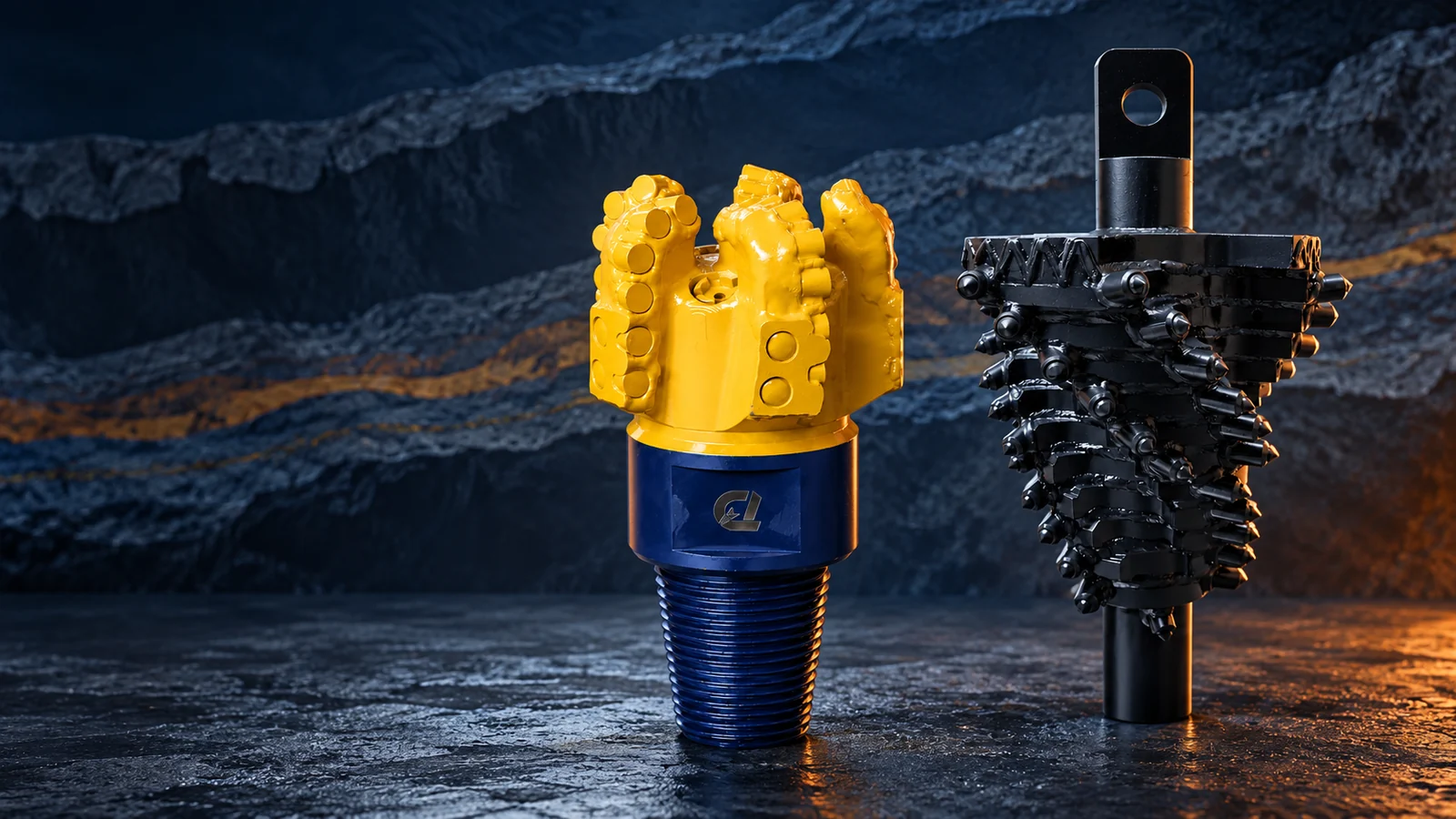
Mixed ground requires an adaptable plan, not a universal cutter. The best starting point is to map each formation interval, identify the transition zones most likely to disturb steering or cleaning, and select pilot and reaming tools that the rig can control through the entire bore. A tool that is fast in one layer can become unstable, overloaded or difficult to clean in the next.
Typical mixed-ground bores may move between clay, sand, gravel, cobble, weathered rock, fractured rock and competent rock. The sequence and thickness of those layers matter as much as their names.
Why transitions create problems
When only part of the cutting structure enters a harder layer, the tool can experience uneven loading. The result may include vibration, lateral movement, inconsistent penetration and localized cutter wear. At the same time, cuttings can change from cohesive clay to coarse fragments, requiring a different cleaning response.
For that reason, the bore plan should identify:
- the expected start and end of each layer;
- the angle at which the bore crosses the interface;
- the weakest or most unstable zones;
- intervals with cobble, voids or groundwater;
- locations where returns may be difficult to maintain;
- the longest interval that controls tool wear or production.
The “dominant” ground by total length is not always the controlling ground. A short, abrasive or severely fractured interval can determine the safest tooling choice.
Build the pilot strategy first
The pilot assembly must provide both cutting ability and directional control. Compare the expected formations with the available drilling system:
- In cohesive or compacted soils, a steering-oriented bit or suitable carbide cutting structure may be appropriate.
- In competent consolidated rock, a PDC or dedicated rock system may be evaluated.
- In fractured, broken or variable rock, a tricone or other rolling-cone system may be considered.
- In cobble and chunk rock, a tapered, durable structure that can move irregular material may be more controllable than a broad aggressive face.
These are selection categories, not guarantees. Check the tool manufacturer’s application range and the drill manufacturer’s operating limits.
Keep a pilot log by rod. Record thrust, torque, fluid pressure, penetration rate, steering response and observed returns. This creates the most useful map for planning the reaming passes.
Choose a reamer by function
Different reamer geometries cut, mix, pack and transport material differently.
| Reamer category | Typical function to evaluate | Conditions to verify |
|---|---|---|
| Fly-cutter or open-blade reamer | Cutting and mixing with open flow paths | Cohesive soils, cutter wear, blade strength and cleaning |
| Fluted reamer | Cutting plus movement of spoil along the body | Compacted or variable soils, flow path and gauge protection |
| Barrel/packer-style reamer | Bore conditioning and wall compaction | Stable, suitable soils; avoid assuming it can cut every hard inclusion |
| Multi-stage or stepped reamer | Progressive cutting across more than one diameter | Torque distribution, cleaning and transition behavior |
| Roller-cone hole opener | Crushing and chipping rock | Cone type, bearing/seal condition, gauge and cutter replacement |
| PDC reamer/hole opener | Shearing competent formations | Cutter layout, abrasivity, gauge and hydraulics |
Mixed ground may justify a hybrid or application-specific configuration, but the label alone is insufficient. Review how the leading cutting structure meets the formation, how spoil passes the body, and how the tool maintains gauge.
Plan step-ups around capacity and cleaning
A staged reaming plan can reduce peak load and improve cuttings removal, especially where a large diameter increase would otherwise overload the rig or pack the annulus. The appropriate number of passes depends on geology, pilot quality, rig torque and pullback, fluid program, bore length and final diameter.
Avoid copying a step-up schedule from an unrelated project. Instead:
- confirm the as-drilled pilot path;
- review the pilot log for difficult intervals;
- select the first enlargement that can be controlled and cleaned;
- inspect the returned tool and cuttings before approving the next step;
- include a conditioning or swab pass when the engineered procedure requires it.
For many mini-HDD installations, the Plastic Pipe Institute notes that enlargement is needed to accommodate the product and facilitate spoil removal, while larger installations may require pre-reaming in stages. Project specifications and engineering requirements govern the final bore size.
Treat fluid and cuttings as one system
Mixed ground can produce both sticky fines and coarse fragments. A fluid program optimized only for one layer may not transport the other effectively. The reamer, nozzles, pump and fluid properties should therefore be reviewed together.
Monitor:
- return volume and character;
- signs of balling or packed cuttings;
- fluid pressure changes at known transitions;
- cuttings size relative to the available annulus;
- loss of returns or unexpected surface movement;
- torque increases that do not match penetration.
Use a qualified drilling-fluid specialist for mixture and treatment decisions. More flow is not automatically the answer if the annulus, formation or disposal plan cannot accept it.
Prepare a contingency before drilling
Mixed ground is inherently uncertain. A practical contingency plan may include an alternate pilot bit, replacement cutters, a second reamer geometry, compatible adapters, verified nozzles, connection gauges and an inspection checklist. It should also define the conditions that trigger a stop and review.
Do not wait for severe damage to confirm that the formation changed. Early evidence can include asymmetric wear, declining steering response, repeated torque spikes, damaged gauge protection or a sudden change in cuttings.
Frequently asked questions
What is mixed ground in HDD?
Mixed ground is a bore path containing materially different formations or transition zones, such as clay changing to sand, cobble or rock. The change may occur gradually or abruptly.
Is a multi-stage reamer always best for mixed ground?
No. A multi-stage geometry can distribute cutting across diameters, but suitability depends on the actual layers, rig capacity, cuttings transport and required final hole. Other reamer types may be more appropriate.
Should tooling be selected for the hardest layer?
The hardest or most abrasive interval often controls durability, but the complete bore must be considered. A tool must also remain steerable, cleanable and stable in the softer or less competent layers.
What data improves a mixed-ground recommendation?
Provide the geotechnical profile, layer depths, bore geometry, pilot log, drill model, connection, pump capability, target diameters, product pipe and photographs of used tooling or cuttings.
References and further reading
- Vermeer: What to know about drilling in different ground conditions
- Vermeer: Do not overlook HDD tooling
- Plastic Pipe Institute: HDD back-ream choices
Suggested internal CTA: Send the bore profile and formation intervals for a mixed-ground tool configuration review.